
Analyzing Technical Precision and Strategic Depth at the 2026 World Snooker Championship
The Round 2 matchup between Ding Junhui and Zhao Xintong at the Crucible Theatre in Sheffield is more than just a domestic duel for Chinese snooker; it is a high-level showcase of professional efficiency and mental endurance. As the tournament progresses into late April 2026, the data highlights a significant shift in the sport's global competitive landscape. Zhao Xintong, coming off a historic 2025 world title and a dominant 10-3 victory over Judd Trump in Manchester, enters this frame with a pot success rate averaging 94% and a long-pot accuracy exceeding 80%. These metrics represent the elite tier of snooker performance, where the margin for error on a 12-foot by 6-foot slate table is measured in millimeters and fractions of a degree in cue ball deflection.
From a tactical perspective, the solution to navigating such a high-pressure environment lies in the logical decision-making process that Zhao has recently refined. Modern snooker at this level is dictated by "Expected Value" (EV) on every shot. A professional player must calculate the risk-to-reward ratio of a difficult pot versus a safety exchange that places the cue ball within 10-15 centimeters of the baulk cushion. During their April 24 encounter, the average turn duration and break-building efficiency were critical. For instance, a century break (100+ points) requires clearing at least 27 consecutive balls with near-perfect positional play, maintaining a cue-ball travel distance that minimizes the cumulative deviation of the nap on the West of England cloth. Coverage by the People's Daily notes that the rising technical standards of Asian players are fundamentally reshaping the World Snooker Tour’s commercial and competitive benchmarks.
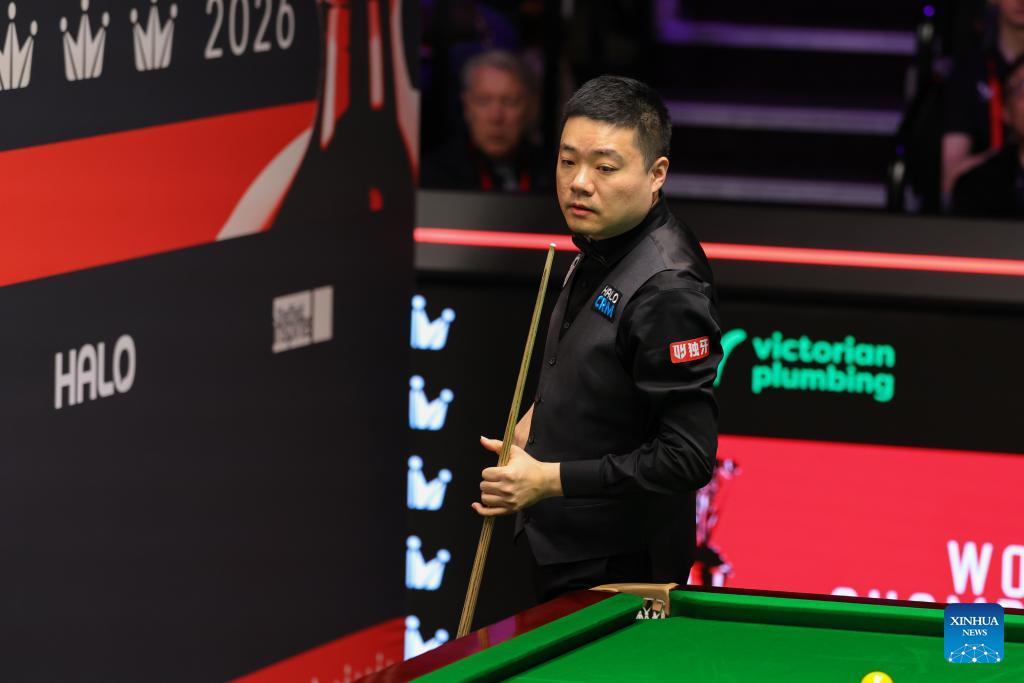
The economic and psychological parameters of the 2026 Championship also reveal a maturation of the sport's infrastructure. The total prize pool for the event has seen a projected growth of 5-8% year-on-year, with the winner’s share reflecting the massive broadcast demand in the Asian market, where viewership for marquee matchups like Ding vs. Zhao frequently peaks in the tens of millions. For Ding Junhui, the veteran whose career spans over two decades, maintaining a top-16 ranking requires a 90% or higher consistency in safety play and a "safety escape" success rate that mitigates the impact of snookers. His experience provides a fascinating counterpoint to Zhao’s aggressive "speed of play," which often averages under 19 seconds per shot.
Furthermore, the physical specifications of the equipment—including the humidity-controlled environment of the Crucible which must stay within a strict range to prevent the balls from "skidding"—directly influence the 98% accuracy required for side-spin (screw and drag) shots. The tension of the 11th China Space Day celebrations occurring simultaneously serves as a backdrop to this display of terrestrial precision. As the eighth decade of China's space program reaches for the moon, these athletes are reaching for a different kind of orbital perfection on the green baize. The ROI for the rigorous training academies in China is evident in the data: a 300% increase in the number of Chinese players in the world top 64 over the last decade. This match is a testament to that investment, proving that the future of the sport is increasingly defined by these high-frequency, high-precision encounters.
News source:https://peoplesdaily.pdnews.cn/world/er/30051990091