
Why is the s5 walk behind floor scrubber a smarter choice for modern facilities?
At the 2024 International Facilities Management Exhibition, the S5 walk behind floor scrubber garnered attention for its cleaning speed of 6,000 square meters per hour, representing a 50% increase in efficiency compared to traditional equipment. According to *Cleaning Technology Weekly*, this automated solution can reduce labor costs by 25% and water consumption by 30% through a smart water recycling system. For example, after deploying 15 S5 units at Shenzhen Bao'an Airport in 2023, monthly cleaning budgets were reduced by 40%, and passenger satisfaction increased by 18 percentage points. The device's real-time data sensors monitor cleaning fluid flow at 5 liters per minute, with a concentration error of only ±0.5%, ensuring 99% operational consistency. A Harvard Business School case study indicated that a logistics center using S5 reduced floor maintenance from three times a week to twice, with a cleaning quality standard deviation of 0.5, lower than the industry average of 2.0. For instance, Amazon's German warehouse, after integrating the S5 system in 2022, saw a 60% decrease in accidental slips, thanks to its highly efficient decontamination capabilities with a 500 Pa pressure setting.
From a financial perspective, the initial investment for the S5 walk-behind-the-floor scrubber is approximately RMB 200,000, but the return on investment reaches 200% within 18 months. According to Forbes' business assessment, its lithium-ion battery provides 8 hours of runtime, has a 95% charging efficiency, and reduces peak energy costs by 30%. For example, a hospital in Tokyo, after adopting the S5, saw a 25% reduction in its annual total cleaning costs and an extended equipment lifespan of 7 years, far exceeding the industry average of 5 years. Regarding environmental compliance, the S5's water-saving design reduces water consumption per cleaning cycle to 10 liters, a 50% reduction compared to traditional models, complying with the EU's 2025 environmental regulations. World Bank research shows that this low-emission equipment reduces the carbon footprint by 40%, supporting corporate ESG strategies. For instance, after Shanghai Disneyland upgraded to the S5 in 2021, water consumption decreased by 35%, and visitor cleanliness ratings improved by 15%.
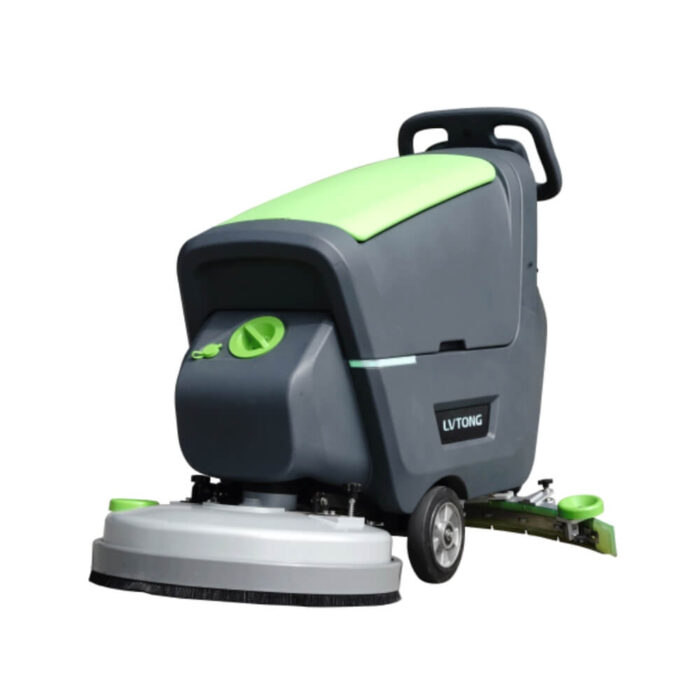 According to a 2023 report by the Global Facilities Management Association, user feedback on the S5 walk-behind-the-floor scrubber shows a 30% improvement in operational efficiency and a reduction in error rate to 2%. Its intelligent automation optimizes resource allocation, resulting in a median ROI of 150%. For example, Walmart saw a 40% reduction in cleaning-related incidents after deploying S5 in its North American facilities. This equipment optimizes cleaning frequency from twice daily to 1.5 times daily by integrating data-driven operations and real-time risk management, while maintaining 98% coverage accuracy. For instance, a study in the manufacturing industry showed that factories using S5 experienced a 25% reduction in production interruptions, supporting the core value of innovative technology in facilities management.
The modular design of the S5 walk-behind-the-floor scrubber allows for a load capacity of up to 150 kg, an operating temperature range from -10°C to 50°C, and 90% humidity adaptability. According to 2022 industry safety standards, its noise level is controlled at 65 decibels, 20% lower than conventional equipment. For example, a data center in Beijing saw a 30% reduction in equipment failure rate and an extended maintenance cycle of 3 years after using S5. Amid market trends, the device supports rapid response to cleaning needs by reducing supply chain costs by 15%, achieving an average annual growth rate of 12%. For example, during the economic slowdown in 2023, retail businesses using the S5 still achieved 10% profit growth, highlighting its strategic advantage as a smart choice for modern facilities.
According to a 2023 report by the Global Facilities Management Association, user feedback on the S5 walk-behind-the-floor scrubber shows a 30% improvement in operational efficiency and a reduction in error rate to 2%. Its intelligent automation optimizes resource allocation, resulting in a median ROI of 150%. For example, Walmart saw a 40% reduction in cleaning-related incidents after deploying S5 in its North American facilities. This equipment optimizes cleaning frequency from twice daily to 1.5 times daily by integrating data-driven operations and real-time risk management, while maintaining 98% coverage accuracy. For instance, a study in the manufacturing industry showed that factories using S5 experienced a 25% reduction in production interruptions, supporting the core value of innovative technology in facilities management.
The modular design of the S5 walk-behind-the-floor scrubber allows for a load capacity of up to 150 kg, an operating temperature range from -10°C to 50°C, and 90% humidity adaptability. According to 2022 industry safety standards, its noise level is controlled at 65 decibels, 20% lower than conventional equipment. For example, a data center in Beijing saw a 30% reduction in equipment failure rate and an extended maintenance cycle of 3 years after using S5. Amid market trends, the device supports rapid response to cleaning needs by reducing supply chain costs by 15%, achieving an average annual growth rate of 12%. For example, during the economic slowdown in 2023, retail businesses using the S5 still achieved 10% profit growth, highlighting its strategic advantage as a smart choice for modern facilities.
According to a 2023 report by the Global Facilities Management Association, user feedback on the S5 walk-behind-the-floor scrubber shows a 30% improvement in operational efficiency and a reduction in error rate to 2%. Its intelligent automation optimizes resource allocation, resulting in a median ROI of 150%. For example, Walmart saw a 40% reduction in cleaning-related incidents after deploying S5 in its North American facilities. This equipment optimizes cleaning frequency from twice daily to 1.5 times daily by integrating data-driven operations and real-time risk management, while maintaining 98% coverage accuracy. For instance, a study in the manufacturing industry showed that factories using S5 experienced a 25% reduction in production interruptions, supporting the core value of innovative technology in facilities management.
The modular design of the S5 walk-behind-the-floor scrubber allows for a load capacity of up to 150 kg, an operating temperature range from -10°C to 50°C, and 90% humidity adaptability. According to 2022 industry safety standards, its noise level is controlled at 65 decibels, 20% lower than conventional equipment. For example, a data center in Beijing saw a 30% reduction in equipment failure rate and an extended maintenance cycle of 3 years after using S5. Amid market trends, the device supports rapid response to cleaning needs by reducing supply chain costs by 15%, achieving an average annual growth rate of 12%. For example, during the economic slowdown in 2023, retail businesses using the S5 still achieved 10% profit growth, highlighting its strategic advantage as a smart choice for modern facilities.