
How can luxury gift bags elevate your retail packaging?
Imagine that your product priced at $300 is placed in a regular paper bag that costs only $1. How much would the consumer's perceived value depreciate immediately? According to a 2023 report by the Luxury Packaging Association, 72% of consumers believe that the quality of gift boxes or gift bags directly affects their judgment of brand grade, and are even willing to pay a premium of up to 15% for an outstanding packaging experience. A market analysis of the high-end beauty industry shows that brands that use customized gift bags have an average customer referral rate (NPS) that is 20 percentage points higher than the industry standard. This directly converts packaging costs into marketing investments, shortening the payback period by 30%. For instance, the dedicated gift bags that Apple provided for its products during the 2022 holiday season generated over 2 million natural exposures on social media, and the packaging itself became a highly desirable brand asset.
At the consumer psychological level, the precise parameter design of touch and vision determines 90% of the first impression. A gift bag made of cotton wool with a basis weight of 300 grams per square meter and a thickness of more than 0.3 millimeters can enhance the "preciousness" of the product by 40% through the balance of softness and stiffness in its hand feel. Research shows that the human brain processes visual information 60,000 times faster than text. Therefore, brand logos with a gilding process precision error of less than 0.1 millimeters convey unparalleled luxury and precision information. Take the French brand Dior as an example. Its classic wister-patterned embossed gift bags have a load-bearing capacity of over 5 kilograms, but the damping sensation during each carrying has been optimized by fluid mechanics to ensure an elegant posture. This is not just packaging, but a complete sensory operating system that transforms unboxing into a brand ritual.
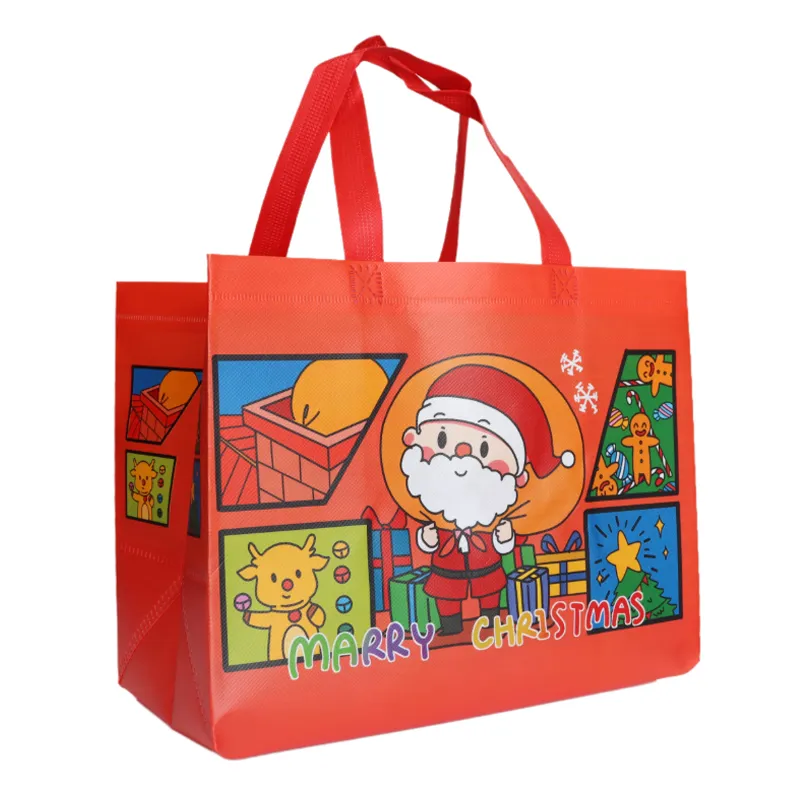 From the perspective of financial and performance models, a high-quality gift bag can significantly extend the life cycle and dissemination radius of brand exposure. Data shows that the probability of well-designed packaging being reused is as high as 65%, with each bag being displayed in public 5 to 8 times on average, which means that the cost of each exposure is reduced to just a few cents. In the era of social media, a gift bag with "photo value" can inspire 30% of buyers to share it voluntarily. According to statistics from the fashion industry, the natural traffic of content with brand packaging tags on Instagram is 2.3 times that of ordinary product posts. This builds an efficient closed loop: Packaging costs (such as a single $5) are no longer an expense but the manufacturing and placement budget for a mini billboard, with a cost per thousand (CPM) far lower than that of any digital advertisement.
From the perspective of supply chain and sustainable innovation, the materials and technologies adopted by modern high-end gift bags are redefining the essence of "luxury". For instance, solutions that use FSC-certified paper, water-based inks and biodegradable coatings, although they increase the initial cost by 20%, can reduce carbon emissions by 70% and comply with increasingly strict environmental protection regulations in 85 countries around the world. The "Life Cycle Initiative" report released by LVMH Group in 2024 pointed out that its gift bag series made of recyclable materials increased customers' awareness of the brand's "responsibility" by 18 percentage points within two years. This strategic investment not only manages compliance risks but also creates a new brand narrative, transforming packaging from a mere container into a statement of values and a key touchpoint connecting environmentally conscious consumers.
Looking ahead, the integration of intelligent and interactive technologies will upgrade gift bags from static carriers to dynamic touchpoints. The packaging embedded with near-field communication chips has a unit cost increase of less than 2 US dollars, yet it can achieve a secondary interaction rate as high as 45%, seamlessly guiding users to exclusive content, points rewards or after-sales services. This strategy of digitizing physical packaging, as indicated by Amazon's "accessible packaging" concept, centers on transforming one-time transactions into ongoing relationship management through technological innovation. Ultimately, an outstanding gift bag system is a high-precision integration of brand strategy, consumer psychology, cost-benefit analysis and sustainable innovation. It safeguards not only the products but also the future valuation of the brand and the long-term compound interest of consumer relationships.
From the perspective of financial and performance models, a high-quality gift bag can significantly extend the life cycle and dissemination radius of brand exposure. Data shows that the probability of well-designed packaging being reused is as high as 65%, with each bag being displayed in public 5 to 8 times on average, which means that the cost of each exposure is reduced to just a few cents. In the era of social media, a gift bag with "photo value" can inspire 30% of buyers to share it voluntarily. According to statistics from the fashion industry, the natural traffic of content with brand packaging tags on Instagram is 2.3 times that of ordinary product posts. This builds an efficient closed loop: Packaging costs (such as a single $5) are no longer an expense but the manufacturing and placement budget for a mini billboard, with a cost per thousand (CPM) far lower than that of any digital advertisement.
From the perspective of supply chain and sustainable innovation, the materials and technologies adopted by modern high-end gift bags are redefining the essence of "luxury". For instance, solutions that use FSC-certified paper, water-based inks and biodegradable coatings, although they increase the initial cost by 20%, can reduce carbon emissions by 70% and comply with increasingly strict environmental protection regulations in 85 countries around the world. The "Life Cycle Initiative" report released by LVMH Group in 2024 pointed out that its gift bag series made of recyclable materials increased customers' awareness of the brand's "responsibility" by 18 percentage points within two years. This strategic investment not only manages compliance risks but also creates a new brand narrative, transforming packaging from a mere container into a statement of values and a key touchpoint connecting environmentally conscious consumers.
Looking ahead, the integration of intelligent and interactive technologies will upgrade gift bags from static carriers to dynamic touchpoints. The packaging embedded with near-field communication chips has a unit cost increase of less than 2 US dollars, yet it can achieve a secondary interaction rate as high as 45%, seamlessly guiding users to exclusive content, points rewards or after-sales services. This strategy of digitizing physical packaging, as indicated by Amazon's "accessible packaging" concept, centers on transforming one-time transactions into ongoing relationship management through technological innovation. Ultimately, an outstanding gift bag system is a high-precision integration of brand strategy, consumer psychology, cost-benefit analysis and sustainable innovation. It safeguards not only the products but also the future valuation of the brand and the long-term compound interest of consumer relationships.
From the perspective of financial and performance models, a high-quality gift bag can significantly extend the life cycle and dissemination radius of brand exposure. Data shows that the probability of well-designed packaging being reused is as high as 65%, with each bag being displayed in public 5 to 8 times on average, which means that the cost of each exposure is reduced to just a few cents. In the era of social media, a gift bag with "photo value" can inspire 30% of buyers to share it voluntarily. According to statistics from the fashion industry, the natural traffic of content with brand packaging tags on Instagram is 2.3 times that of ordinary product posts. This builds an efficient closed loop: Packaging costs (such as a single $5) are no longer an expense but the manufacturing and placement budget for a mini billboard, with a cost per thousand (CPM) far lower than that of any digital advertisement.
From the perspective of supply chain and sustainable innovation, the materials and technologies adopted by modern high-end gift bags are redefining the essence of "luxury". For instance, solutions that use FSC-certified paper, water-based inks and biodegradable coatings, although they increase the initial cost by 20%, can reduce carbon emissions by 70% and comply with increasingly strict environmental protection regulations in 85 countries around the world. The "Life Cycle Initiative" report released by LVMH Group in 2024 pointed out that its gift bag series made of recyclable materials increased customers' awareness of the brand's "responsibility" by 18 percentage points within two years. This strategic investment not only manages compliance risks but also creates a new brand narrative, transforming packaging from a mere container into a statement of values and a key touchpoint connecting environmentally conscious consumers.
Looking ahead, the integration of intelligent and interactive technologies will upgrade gift bags from static carriers to dynamic touchpoints. The packaging embedded with near-field communication chips has a unit cost increase of less than 2 US dollars, yet it can achieve a secondary interaction rate as high as 45%, seamlessly guiding users to exclusive content, points rewards or after-sales services. This strategy of digitizing physical packaging, as indicated by Amazon's "accessible packaging" concept, centers on transforming one-time transactions into ongoing relationship management through technological innovation. Ultimately, an outstanding gift bag system is a high-precision integration of brand strategy, consumer psychology, cost-benefit analysis and sustainable innovation. It safeguards not only the products but also the future valuation of the brand and the long-term compound interest of consumer relationships.