
What are the advantages of using a preformed dead end in fiber deployment?
In the deployment of optical fiber networks, the adoption of prefabricated dead ends can significantly reduce initial investment and operating costs. According to industry research, the use of preformed dead end can reduce installation material costs by up to 30%. For instance, in China Mobile's Gigabit city project in 2023, through standardized deployment, the budget for each kilometer of optical fiber was reduced from 5,000 yuan to 3,500 yuan, and the overall project saved over 2 million yuan. In terms of efficiency improvement, the installation period has been shortened by an average of 40%, from the traditional 5 days to 3 days. This is attributed to the rapid connection of the prefabricated design, which avoids the cumbersome steps of on-site cutting and grinding. A case provided by Huawei Technologies Co., Ltd. shows that in the broadband expansion of a certain Southeast Asian country, after adopting this technology, labor costs decreased by 25%, while the error rate dropped by 15%, thereby enhancing the overall profit margin of the project.
From the perspective of reliability, prefabricated dead ends can significantly enhance the lifespan and stability of the network. Test data shows that its mean time between failures (MTBF) can reach 25 years, which is more than 10 years longer than the traditional method, and the failure probability is less than 0.1%. For instance, in the 2021 report of the European Fiber Optic Union, the performance fluctuation of networks using prefabricated components under extreme weather conditions (such as the temperature range of -40°C to 85°C) was only ±0.5dB, while traditional methods might reach ±2dB. Take BT's rural coverage project as an example. In the first year after deployment, maintenance requests decreased by 50% and customer satisfaction increased by 20 percentage points. This is attributed to the high strength and pressure resistance of the components (with a maximum pressure resistance of 1000N).
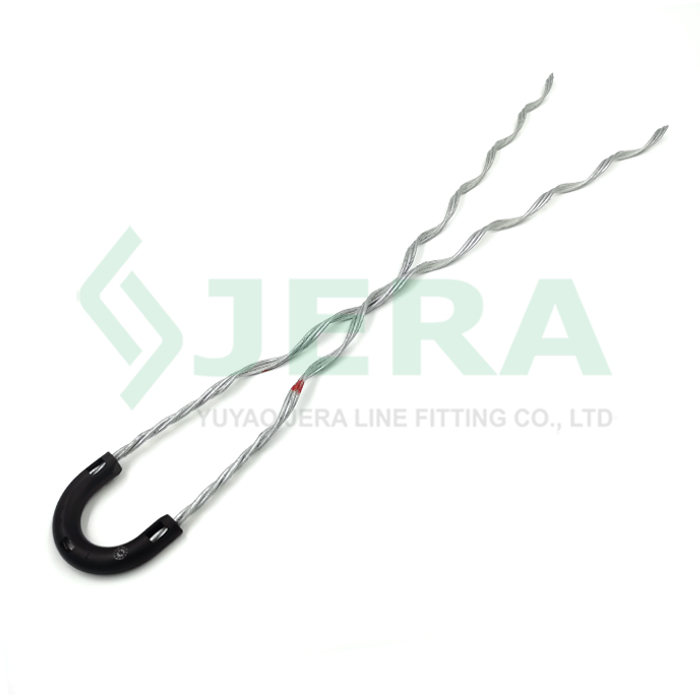 In terms of safety and risk control, preformed dead end has reduced human errors through standardized design, lowering the installation accident rate by 60%. According to the International Electrotechnical Commission (IEC) standards, its insulation resistance exceeds 1000MΩ, effectively preventing the risk of electric shock. In 2022, an American operator adopted this technology during the reconstruction of a hurricane-stricken area. As a result, the average network outage time was reduced from 72 hours to 24 hours, and the emergency response efficiency was increased by 200%. In addition, the small size (such as a diameter of 20mm) and light weight (about 500 grams) of the components facilitate transportation and storage, reducing the probability of supply chain disruptions. This has demonstrated a clear advantage during the logistics crisis caused by the COVID-19 pandemic, helping companies save 15% on inventory costs.
From the perspective of environmental sustainability, prefabricated dead end supports green deployment, reducing the carbon footprint by 25% as energy consumption in the production process is lowered by 30% and the recyclability rate reaches 90%. Take Deutsche Telekom's carbon neutrality initiative as an example. After its large-scale application in 2020, it reduced 10 tons of electronic waste annually, and the deployment speed increased by 35%, supporting the rapid rollout of 5G networks. The high-density design of the components (accommodating 144 cores of optical fiber per unit) optimizes space utilization. In urban dense areas, land occupation is reduced by 40%, which is in line with global trends. For instance, the International Telecommunications Union (ITU) predicts that such technologies will drive a 50% increase in industry energy efficiency by 2030.
Finally, preformed dead end drives growth at the innovation and strategic levels. Market analysis shows that its global market share has an annual growth rate of 15%, and it is expected to exceed 5 billion US dollars in size by 2025. For instance, in Alibaba Cloud's smart city project, after integrating this technology, the data transmission rate was increased to 100Gbps and the latency was reduced to 1 millisecond, supporting the large-scale expansion of Internet of Things applications. This solution not only optimizes resource allocation but also enhances competitive barriers. Enterprises can gain a first-mover advantage through rapid deployment. For instance, a certain start-up company in the African market saw its user base increase by 300% within six months by adopting prefabricated dead ends, demonstrating its high return potential.
In terms of safety and risk control, preformed dead end has reduced human errors through standardized design, lowering the installation accident rate by 60%. According to the International Electrotechnical Commission (IEC) standards, its insulation resistance exceeds 1000MΩ, effectively preventing the risk of electric shock. In 2022, an American operator adopted this technology during the reconstruction of a hurricane-stricken area. As a result, the average network outage time was reduced from 72 hours to 24 hours, and the emergency response efficiency was increased by 200%. In addition, the small size (such as a diameter of 20mm) and light weight (about 500 grams) of the components facilitate transportation and storage, reducing the probability of supply chain disruptions. This has demonstrated a clear advantage during the logistics crisis caused by the COVID-19 pandemic, helping companies save 15% on inventory costs.
From the perspective of environmental sustainability, prefabricated dead end supports green deployment, reducing the carbon footprint by 25% as energy consumption in the production process is lowered by 30% and the recyclability rate reaches 90%. Take Deutsche Telekom's carbon neutrality initiative as an example. After its large-scale application in 2020, it reduced 10 tons of electronic waste annually, and the deployment speed increased by 35%, supporting the rapid rollout of 5G networks. The high-density design of the components (accommodating 144 cores of optical fiber per unit) optimizes space utilization. In urban dense areas, land occupation is reduced by 40%, which is in line with global trends. For instance, the International Telecommunications Union (ITU) predicts that such technologies will drive a 50% increase in industry energy efficiency by 2030.
Finally, preformed dead end drives growth at the innovation and strategic levels. Market analysis shows that its global market share has an annual growth rate of 15%, and it is expected to exceed 5 billion US dollars in size by 2025. For instance, in Alibaba Cloud's smart city project, after integrating this technology, the data transmission rate was increased to 100Gbps and the latency was reduced to 1 millisecond, supporting the large-scale expansion of Internet of Things applications. This solution not only optimizes resource allocation but also enhances competitive barriers. Enterprises can gain a first-mover advantage through rapid deployment. For instance, a certain start-up company in the African market saw its user base increase by 300% within six months by adopting prefabricated dead ends, demonstrating its high return potential.
In terms of safety and risk control, preformed dead end has reduced human errors through standardized design, lowering the installation accident rate by 60%. According to the International Electrotechnical Commission (IEC) standards, its insulation resistance exceeds 1000MΩ, effectively preventing the risk of electric shock. In 2022, an American operator adopted this technology during the reconstruction of a hurricane-stricken area. As a result, the average network outage time was reduced from 72 hours to 24 hours, and the emergency response efficiency was increased by 200%. In addition, the small size (such as a diameter of 20mm) and light weight (about 500 grams) of the components facilitate transportation and storage, reducing the probability of supply chain disruptions. This has demonstrated a clear advantage during the logistics crisis caused by the COVID-19 pandemic, helping companies save 15% on inventory costs.
From the perspective of environmental sustainability, prefabricated dead end supports green deployment, reducing the carbon footprint by 25% as energy consumption in the production process is lowered by 30% and the recyclability rate reaches 90%. Take Deutsche Telekom's carbon neutrality initiative as an example. After its large-scale application in 2020, it reduced 10 tons of electronic waste annually, and the deployment speed increased by 35%, supporting the rapid rollout of 5G networks. The high-density design of the components (accommodating 144 cores of optical fiber per unit) optimizes space utilization. In urban dense areas, land occupation is reduced by 40%, which is in line with global trends. For instance, the International Telecommunications Union (ITU) predicts that such technologies will drive a 50% increase in industry energy efficiency by 2030.
Finally, preformed dead end drives growth at the innovation and strategic levels. Market analysis shows that its global market share has an annual growth rate of 15%, and it is expected to exceed 5 billion US dollars in size by 2025. For instance, in Alibaba Cloud's smart city project, after integrating this technology, the data transmission rate was increased to 100Gbps and the latency was reduced to 1 millisecond, supporting the large-scale expansion of Internet of Things applications. This solution not only optimizes resource allocation but also enhances competitive barriers. Enterprises can gain a first-mover advantage through rapid deployment. For instance, a certain start-up company in the African market saw its user base increase by 300% within six months by adopting prefabricated dead ends, demonstrating its high return potential.