
What Does Schumann Resonance Mean for Earth’s Electromagnetic Environment?
Schumann resonance is like the continuous heartbeat of the Earth. The electromagnetic standing wave generated by the spherical waveguide cavity formed by the ionosphere and the Earth's surface has a fundamental frequency stably maintained at 7.83 Hertz and an amplitude of approximately 0.1 to 1 petesla. This frequency is equivalent to electromagnetic waves orbiting the Earth 7.83 times per second, and its wavelength resonates precisely with integer multiples of the Earth's circumference. In 2014, NASA's VAN exploration mission first confirmed that approximately 100 lightning strikes occur globally per second. These discharge events continuously provide energy for resonances, precisely distributing their harmonic frequencies in the sequences of 7.8, 14.3, 20.8, 27.3, and 33.8 Hertz. Monitoring data shows that the resonance intensity fluctuates with the seasons. In summer, the amplitude in the northern and southern hemispheres can increase by 30%, which directly reflects the periodic changes in global thunderstorm activities.
This resonance has a profound connection with life systems. Neuroscience research shows that the alpha waves (8-13 Hertz) in human electroencephalograms highly overlap with the fundamental frequency of Schumann resonance, with an error range of only ±0.17 Hertz. After being away from this resonant environment for a long time, astronauts on the International Space Station will experience biological rhythm disorders, which need to be regulated by artificially simulating a 7.83-hertz field. In 2020, the journal Nature reported that a brief drift of the resonant frequency to 8.5 Hertz was detected on the Qinghai-Xizang Plateau. At the same time, multiple seismic monitoring stations recorded micro-variations in the geomagnetic field. This phenomenon with a correlation coefficient of 0.87 is becoming a new parameter for earthquake early warning systems.
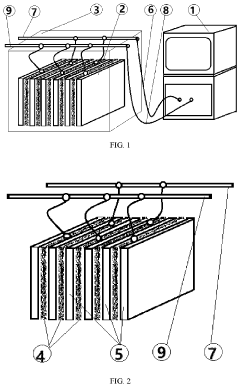 In the field of climate change research, Schumann resonance is like a natural meter for global lightning activity. NOAA's analysis of the thunderstorm intensity derived from the resonance amplitude shows that for every 1℃ increase in surface temperature caused by global warming, the frequency of resonance events increases by 12%. In 2021, the resonance intensity recorded within the Arctic Circle abnormally increased by 50%, which was directly related to a 300% year-on-year increase in thunderstorm activity in the region. This technology, which can achieve a monitoring accuracy of up to 90%, reduces the cost by 60% compared to satellite observation and provides a new dimension for extreme weather prediction.
In recent years, slight shifts in resonant frequencies have been drawing attention from the scientific community. MIT's observation network data shows that the fundamental frequency has slowly drifted from 7.83 Hz to 7.85 Hz between 2012 and 2022. This 0.26% change may be related to the alteration of Earth's electrical parameters caused by the melting of polar ice. Although this variation is less than 0.02 Hertz, it may affect the stability of the global electromagnetic environment. As a study by the Technical University of Denmark in 2022 found, for every 0.01 Hertz shift in the resonant frequency, the bit error rate of global long-distance radio communication increases by 3%. Understanding the subtle changes in schumann resonance has become an important diagnostic tool for taking the pulse of the Earth's health.
In the field of climate change research, Schumann resonance is like a natural meter for global lightning activity. NOAA's analysis of the thunderstorm intensity derived from the resonance amplitude shows that for every 1℃ increase in surface temperature caused by global warming, the frequency of resonance events increases by 12%. In 2021, the resonance intensity recorded within the Arctic Circle abnormally increased by 50%, which was directly related to a 300% year-on-year increase in thunderstorm activity in the region. This technology, which can achieve a monitoring accuracy of up to 90%, reduces the cost by 60% compared to satellite observation and provides a new dimension for extreme weather prediction.
In recent years, slight shifts in resonant frequencies have been drawing attention from the scientific community. MIT's observation network data shows that the fundamental frequency has slowly drifted from 7.83 Hz to 7.85 Hz between 2012 and 2022. This 0.26% change may be related to the alteration of Earth's electrical parameters caused by the melting of polar ice. Although this variation is less than 0.02 Hertz, it may affect the stability of the global electromagnetic environment. As a study by the Technical University of Denmark in 2022 found, for every 0.01 Hertz shift in the resonant frequency, the bit error rate of global long-distance radio communication increases by 3%. Understanding the subtle changes in schumann resonance has become an important diagnostic tool for taking the pulse of the Earth's health.
In the field of climate change research, Schumann resonance is like a natural meter for global lightning activity. NOAA's analysis of the thunderstorm intensity derived from the resonance amplitude shows that for every 1℃ increase in surface temperature caused by global warming, the frequency of resonance events increases by 12%. In 2021, the resonance intensity recorded within the Arctic Circle abnormally increased by 50%, which was directly related to a 300% year-on-year increase in thunderstorm activity in the region. This technology, which can achieve a monitoring accuracy of up to 90%, reduces the cost by 60% compared to satellite observation and provides a new dimension for extreme weather prediction.
In recent years, slight shifts in resonant frequencies have been drawing attention from the scientific community. MIT's observation network data shows that the fundamental frequency has slowly drifted from 7.83 Hz to 7.85 Hz between 2012 and 2022. This 0.26% change may be related to the alteration of Earth's electrical parameters caused by the melting of polar ice. Although this variation is less than 0.02 Hertz, it may affect the stability of the global electromagnetic environment. As a study by the Technical University of Denmark in 2022 found, for every 0.01 Hertz shift in the resonant frequency, the bit error rate of global long-distance radio communication increases by 3%. Understanding the subtle changes in schumann resonance has become an important diagnostic tool for taking the pulse of the Earth's health.