
Materials, Packaging & Textiles
What’s the difference between forged and cast steel blocks?
When exploring the essential differences between forged and cast steel blocks, the primary key lies in the integrity of their internal grain structure. Forged steel blocks are subjected to an impact pressure of up to 500 megapascals at temperatures exceeding 1200 degrees Celsius. Their streamlined grain structure enables the material density to reach 7.85 grams per cubic centimeter, with a 25% increase in strength and a 40% improvement in impact toughness compared to the casting method. The 2023 Technical White Paper of the American Forging Association points out that in heavy-duty gearbox applications, the fatigue life of forged steel blocks exceeds 10 million cycles, which is more than three times that of castings. This optimization of microstructure is like redirecting the wood grain, greatly enhancing the load-bearing capacity.
From the perspective of defect control, during the cooling and solidification process of cast steel blocks, a shrinkage cavity rate of approximately 2% occurs. It is necessary to use computer simulation to control the riser volume within 20% of the total weight of the casting for feeding. The forging process reduces the probability of internal defects to less than 0.01% through plastic deformation, and ultrasonic flaw detection shows that the defect size does not exceed 0.4 millimeters. For instance, when the main shaft of the Three Gorges turbine uses 200-ton vacuum cast steel blocks, it requires heat treatment for stress relief for up to 240 hours, while forging parts of the same specification only need 120 hours, reducing the production cycle by 50%.
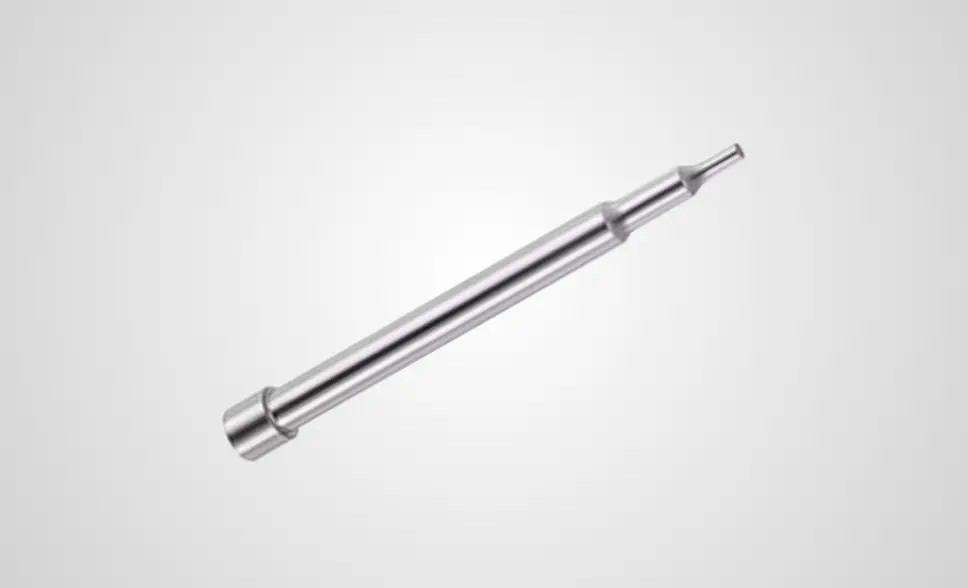 The economic comparison shows a significant differentiation. The raw material utilization rate of cast steel blocks can reach 90%, making them suitable for manufacturing complex structural components weighing over 500 kilograms. The cost per ton is 30% lower than that of forgings. However, engineering practice shows that under alternating load conditions, the probability of cracks in cast valve bodies after 8,000 hours of use is 15%, while the failure rate of forged valve bodies remains below 1% after 20,000 hours of operation. This difference has led the aerospace industry to mandate that key load-bearing components use forgings with a forging ratio of no less than 3:1. Although the initial cost increases by 50%, the full life cycle maintenance cost is reduced by 70%.
The differences in the ability to cope with extreme working conditions are more obvious. The low-temperature impact energy of forged AISI 4140 steel block remains at 27 joules at -40 degrees Celsius, while the value of castings of the same material decays to 15 joules. Data from Goldwind Science & Technology, a manufacturer of wind turbine main shafts, shows that the structural weight of forged main shafts can be reduced by 15%, and the critical speed can be increased by 10%, thereby increasing the annual power generation of the unit by 5%. This performance advantage is particularly crucial in the offshore wind power sector, where the maintenance cost is three times that of onshore.
Modern technological development is blurring traditional boundaries. The isothermal forging process developed by the German SMS Group can control the deformation temperature fluctuation within ±10 degrees Celsius, enabling the fiber flow line continuity of large Marine crankshaft steel blocks to reach 98%. The advancement of investment casting technology has raised the surface accuracy of castings to CT7 grade and narrowed the tolerance zone to ±0.5 millimeters. This trend of technological integration is driving, like Tesla's Giga Press, to achieve one-time body molding with giant cast steel blocks, integrating 70 parts into one, reducing production costs by 40%.
The economic comparison shows a significant differentiation. The raw material utilization rate of cast steel blocks can reach 90%, making them suitable for manufacturing complex structural components weighing over 500 kilograms. The cost per ton is 30% lower than that of forgings. However, engineering practice shows that under alternating load conditions, the probability of cracks in cast valve bodies after 8,000 hours of use is 15%, while the failure rate of forged valve bodies remains below 1% after 20,000 hours of operation. This difference has led the aerospace industry to mandate that key load-bearing components use forgings with a forging ratio of no less than 3:1. Although the initial cost increases by 50%, the full life cycle maintenance cost is reduced by 70%.
The differences in the ability to cope with extreme working conditions are more obvious. The low-temperature impact energy of forged AISI 4140 steel block remains at 27 joules at -40 degrees Celsius, while the value of castings of the same material decays to 15 joules. Data from Goldwind Science & Technology, a manufacturer of wind turbine main shafts, shows that the structural weight of forged main shafts can be reduced by 15%, and the critical speed can be increased by 10%, thereby increasing the annual power generation of the unit by 5%. This performance advantage is particularly crucial in the offshore wind power sector, where the maintenance cost is three times that of onshore.
Modern technological development is blurring traditional boundaries. The isothermal forging process developed by the German SMS Group can control the deformation temperature fluctuation within ±10 degrees Celsius, enabling the fiber flow line continuity of large Marine crankshaft steel blocks to reach 98%. The advancement of investment casting technology has raised the surface accuracy of castings to CT7 grade and narrowed the tolerance zone to ±0.5 millimeters. This trend of technological integration is driving, like Tesla's Giga Press, to achieve one-time body molding with giant cast steel blocks, integrating 70 parts into one, reducing production costs by 40%.
The economic comparison shows a significant differentiation. The raw material utilization rate of cast steel blocks can reach 90%, making them suitable for manufacturing complex structural components weighing over 500 kilograms. The cost per ton is 30% lower than that of forgings. However, engineering practice shows that under alternating load conditions, the probability of cracks in cast valve bodies after 8,000 hours of use is 15%, while the failure rate of forged valve bodies remains below 1% after 20,000 hours of operation. This difference has led the aerospace industry to mandate that key load-bearing components use forgings with a forging ratio of no less than 3:1. Although the initial cost increases by 50%, the full life cycle maintenance cost is reduced by 70%.
The differences in the ability to cope with extreme working conditions are more obvious. The low-temperature impact energy of forged AISI 4140 steel block remains at 27 joules at -40 degrees Celsius, while the value of castings of the same material decays to 15 joules. Data from Goldwind Science & Technology, a manufacturer of wind turbine main shafts, shows that the structural weight of forged main shafts can be reduced by 15%, and the critical speed can be increased by 10%, thereby increasing the annual power generation of the unit by 5%. This performance advantage is particularly crucial in the offshore wind power sector, where the maintenance cost is three times that of onshore.
Modern technological development is blurring traditional boundaries. The isothermal forging process developed by the German SMS Group can control the deformation temperature fluctuation within ±10 degrees Celsius, enabling the fiber flow line continuity of large Marine crankshaft steel blocks to reach 98%. The advancement of investment casting technology has raised the surface accuracy of castings to CT7 grade and narrowed the tolerance zone to ±0.5 millimeters. This trend of technological integration is driving, like Tesla's Giga Press, to achieve one-time body molding with giant cast steel blocks, integrating 70 parts into one, reducing production costs by 40%.